Inside the PGDCC Curriculum: Elevating Medical Professionals to Aesthetic Experts
Bridging the critical gap between textbook theory and real-world clinical application.
Every year, countless medical professionals graduate with a profound understanding of human anatomy, physiology, and pharmacology. They have spent years mastering the intricate systems of the body. Yet, when they decide to pivot into the lucrative and rapidly expanding field of medical aesthetics, they hit a sudden, daunting wall. The reality is stark: medical schools do not teach you how to properly adjust the pulse duration on an Nd:YAG laser to treat melasma, nor do they teach you the precise pKa values required to formulate a safe chemical peel for sensitive skin.
Aesthetic medicine is an entirely different discipline that marries rigorous medical science with an artistic, nuanced approach to beauty and aging. In 2026, patients walking into a clinic expect flawless, zero-downtime results. They are trusting you with their face. In this high-stakes environment, relying purely on textbook theory or weekend crash courses is a recipe for clinical failure and severe complications.
This is where the Amaraa International Institute of Medical Aesthetics and Cosmetology (IIMAC) steps in. Our flagship Post Graduate Diploma in Cosmetology (PGDCC) is engineered specifically for serious medical professionals. It is the definitive foundational course designed to bridge the chasm between basic medical knowledge and elite aesthetic execution.
Here is an exclusive look inside the PGDCC curriculum, showcasing the exact modules that will transform your medical background into a highly profitable, specialized clinical career.
The Critical Transition: Why Doctors Need Specialized Aesthetic Training
Having an MBBS, BDS, BAMS, or BHMS gives you an incredible head start. You already possess the anatomical knowledge and the ethical framework required for patient care. However, aesthetic procedures involve manipulating healthy tissue to achieve a subjective cosmetic outcome.
When a patient presents with complex, multi-layered pigmentation, a standard medical prescription is insufficient. You need to know how to safely bypass the compromised epidermal barrier to deliver active ingredients, or how to selectively target melanin using light energy without causing thermal damage to the surrounding healthy tissue.
The PGDCC curriculum strips away the guesswork. We focus intensely on the biochemical interactions and physical principles that govern modern aesthetic treatments.
Core Module 1: Advanced Skin Diagnostics and Typing
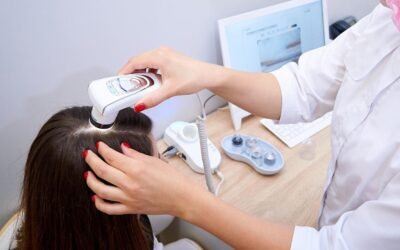
Before you can treat a patient, you must accurately diagnose their canvas. Basic cosmetology courses often stop at identifying whether skin is “oily” or “dry.” The PGDCC module on skin typing dives deep into clinical dermatology.
- Beyond the Fitzpatrick Scale: While the Fitzpatrick scale is crucial for assessing melanin and burn risk, our curriculum teaches you to integrate the Glogau scale for photoaging and evaluate transepidermal water loss (TEWL).
- Molecular Health Assessment: We train you to assess the underlying molecular stability of the skin barrier. Understanding how environmental stressors disrupt cellular function allows you to prescribe targeted, medical-grade homecare that primes the skin for in-clinic procedures.
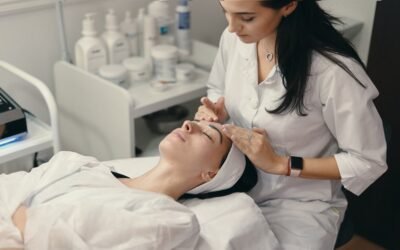
- The Art of the Consultation: You will learn how to conduct a comprehensive aesthetic intake, set realistic patient expectations, and build synergistic treatment plans that combine multiple modalities for superior results.
Core Module 2: The Science and Application of Chemical Peels
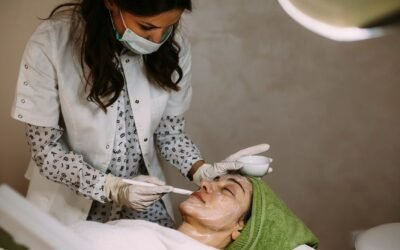
Chemical peeling is often misunderstood as a simple exfoliation process. In reality, it is a highly complex chemical burn controlled entirely by the practitioner. A single mistake in formulation or timing can lead to severe post-inflammatory hyperpigmentation (PIH) or permanent scarring.
Our intensive module on chemical peels transforms you into a master of active delivery systems:
- Acids, pH, and pKa: We break down the precise chemistry of Alpha Hydroxy Acids (AHAs), Beta Hydroxy Acids (BHAs), Trichloroacetic Acid (TCA), and advanced combination peels. You will understand how the pKa value dictates the speed and depth of acid penetration.
- Molecular Formulation Stability: Drawing on modern dermatological science, we teach you how different formulations interact at the cellular level. You will learn to customize active delivery based on the patient’s specific epidermal thickness and lipid barrier integrity.
- Hands-On Execution: Through our Expert-Led, Hands-On Learning methodology, you will apply these peels to live models, learning to recognize the clinical endpoints (such as precise frosting) that indicate it is time to neutralize the acid.
Core Module 3: Aesthetic Laser Physics and Tissue Interaction
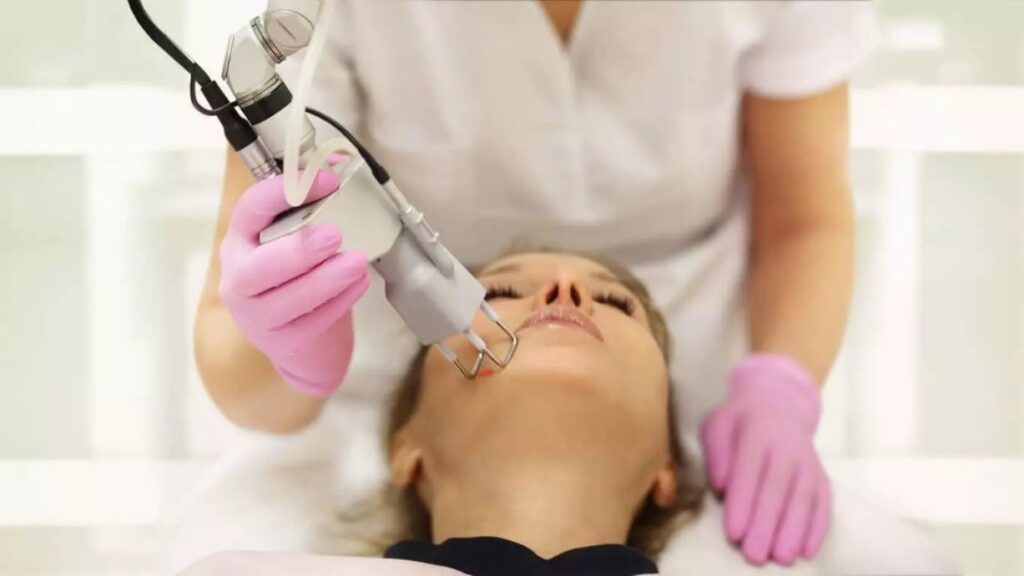
Lasers are the heavy artillery of a modern aesthetic clinic. They represent a massive financial investment and offer the highest return on investment (ROI)—but only if you know how to use them safely and effectively.
The PGDCC laser module demystifies the physics of light-based therapies:
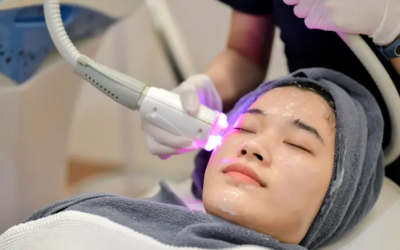
- Selective Photothermolysis: We teach you the fundamental principle of matching a specific wavelength of light to a specific target chromophore (melanin, hemoglobin, or water).
- Mastering Thermal Relaxation Times: This is where textbook theory meets critical real-world application. We delve into the science of tissue interaction, teaching you how to calculate the exact pulse duration required to destroy a target without heat escaping and burning the adjacent healthy tissue. This knowledge is what separates an expert practitioner from someone who merely pushes buttons.
- Device Mastery: You will gain extensive, unlimited hands-on practice with Nd:YAG lasers (for hair reduction and tattoo removal), Q-Switched lasers (for pigmentation), Diode lasers, and fractional resurfacing devices. We ensure you build the muscle memory required to maintain a consistent hand speed and spot size overlap.
Core Module 4: Aesthetic Dermatology and Injectable Fundamentals
While advanced injectables are covered in our fellowship programs, the PGDCC provides a crucial introduction to the broader scope of aesthetic interventions.
- Mesotherapy and Microneedling: You will learn how to safely create micro-injuries in the skin to stimulate natural collagen production and enhance the transdermal delivery of specialized serums.
- Acne and Scar Management: Moving beyond basic extractions, we cover comprehensive protocols for managing active acne and utilizing subcision, derma-rollers, and mild peels to revise atrophic scarring.
- Complication Management: The true mark of a medical professional is the ability to handle adverse events. We provide rigorous protocols for managing everything from mild erythema and allergic reactions to potential laser burns, ensuring patient safety is never compromised.
The IIMAC Difference: Unlimited Learning and Support
What truly sets the Post Graduate Diploma in Cosmetology (PGDCC) apart is not just the depth of the curriculum, but how it is delivered.
We operate on a philosophy of Unlimited Learning. We understand that mastering a chemical peel might take you three days, while perfecting your laser technique might take three weeks. Our flexible, hands-on clinical environment allows you to practice under expert supervision until you achieve absolute clinical confidence.
Furthermore, graduation is not the end of your journey with IIMAC. Because we know the transition from student to practitioner is the hardest part, we provide 45 days of extensive post-course support. As you begin to treat your own patients, our faculty remains available to help you troubleshoot complex cases, review treatment parameters, and ensure your clinical outcomes are exceptional from day one.
We also offer robust Job Placement assistance and Clinic Set Up guidance, ensuring that your newly acquired skills translate directly into career advancement and financial success.
Final Thoughts: Secure Your Future in Aesthetic Medicine
The demand for non-invasive aesthetic procedures will continue to surge exponentially. However, patients are becoming increasingly discerning. They seek out qualified, highly trained medical professionals who offer safety, expertise, and scientifically-backed results.
By completing the PGDCC at Amaraa IIMAC, you bridge the gap between your medical foundation and your aesthetic ambitions. You step out of the classroom and into the clinic not just as a doctor, but as a certified, confident aesthetic expert.
About the Clinic
Amaraa IIMAC – Advanced Medical Aesthetics & Cosmetology Training, Erandwane
Empowering future professionals with world-class education in medical aesthetics and cosmetology.
Led by industry experts, Amaraa IIMAC (International Institute of Medical Aesthetics and Cosmetology) ✨ Expert-Led, Hands-On Learning.
Important Links:
- Post Graduate Diploma in Cosmetology (PGDCC)
- Advanced Diploma in Cosmetology & Tricology(ADCT)
- Fellowship in Cosmetology
- Fellowship in Aesthetic & Anti-Aging Medicine (FAAM)
- Fellowship in Facial Aesthetic (FFA)
Contact & Social:
📞 Call: +91 9022946064
📧 Gmail: info@iimac.in
📍 Address: Sushila Apartments, Plot NO-67/2, B, Karve Rd, Nal Stop, Erandwane, Maharashtra 411004
🗓️ OPEN: 365 Days
🕘 Timings: 9 AM – 7 PM |
Follow Us:
🔗 Instagram | Facebook | Google Maps/Reviews
Amaraa IIMAC (International Institute Of Medical Aesthetics and Cosmetology)
iimac.in .Copyrights 2026. All Rights Reserved.